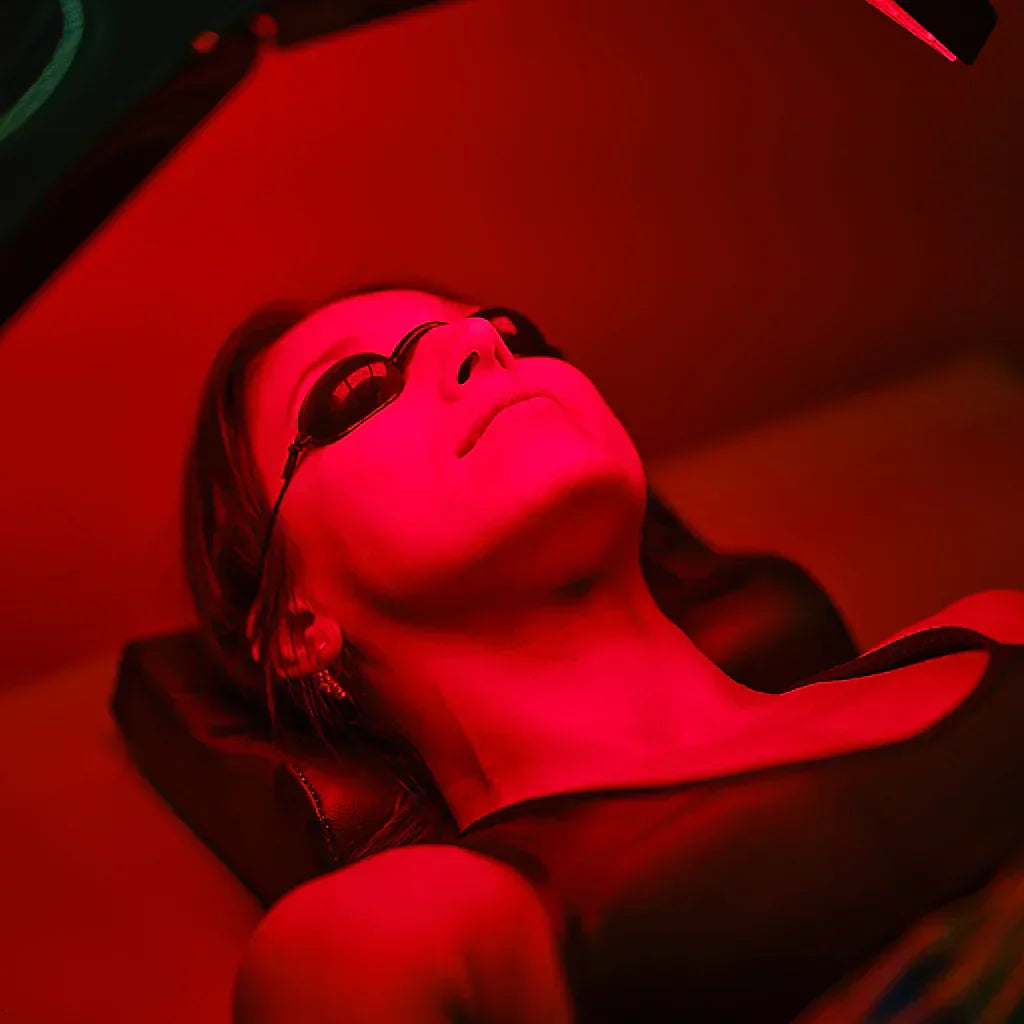


Red light therapy (RLT) is a non-invasive treatment that uses low levels of red and near-infrared light to stimulate activity inside your cells. It's used to support skin rejuvenation, reduce the appearance of wrinkles and redness, calm acne, and accelerate healing — and it's been studied in clinical and dermatological settings for decades.
You may also hear it called by other names: photobiomodulation (PBM), low-level light therapy (LLLT), low-level laser therapy, non-thermal LED light, or simply LED light therapy. They broadly refer to the same underlying principle: specific wavelengths of light delivered at a therapeutic intensity, without heat and without ultraviolet (UV) radiation.
Red light therapy isn't a fringe wellness fad. Interest in the technology originally grew out of NASA research — the space agency experimented with red light first on plant growth and later to help heal wounds in astronauts, after which other potential uses began to be investigated. Today, the related principle of photodynamic therapy using red light is already widely medically accepted and used to treat certain skin conditions including some skin cancers, psoriasis, acne, and warts.
The important distinction for anyone researching this: red light therapy as a cosmetic and wellness tool is an emerging treatment that shows real promise across several skin concerns, while the body of clinical evidence continues to grow. This guide is honest about both what the research supports and where the evidence is still developing.
Red light therapy (RLT) is a non-invasive treatment that uses low levels of red and near-infrared light to stimulate activity inside your cells. It's used to support skin rejuvenation, reduce the appearance of wrinkles and redness, calm acne, and accelerate healing — and it's been studied in clinical and dermatological settings for decades.
You may also hear it called by other names: photobiomodulation (PBM), low-level light therapy (LLLT), low-level laser therapy, non-thermal LED light, or simply LED light therapy. They broadly refer to the same underlying principle: specific wavelengths of light delivered at a therapeutic intensity, without heat and without ultraviolet (UV) radiation.
Red light therapy isn't a fringe wellness fad. Interest in the technology originally grew out of NASA research — the space agency experimented with red light first on plant growth and later to help heal wounds in astronauts, after which other potential uses began to be investigated. Today, the related principle of photodynamic therapy using red light is already widely medically accepted and used to treat certain skin conditions including some skin cancers, psoriasis, acne, and warts.
The important distinction for anyone researching this: red light therapy as a cosmetic and wellness tool is an emerging treatment that shows real promise across several skin concerns, while the body of clinical evidence continues to grow. This guide is honest about both what the research supports and where the evidence is still developing.
The mechanism is well-characterized at the cellular level, and understanding it helps explain why wavelength and consistency matter so much.
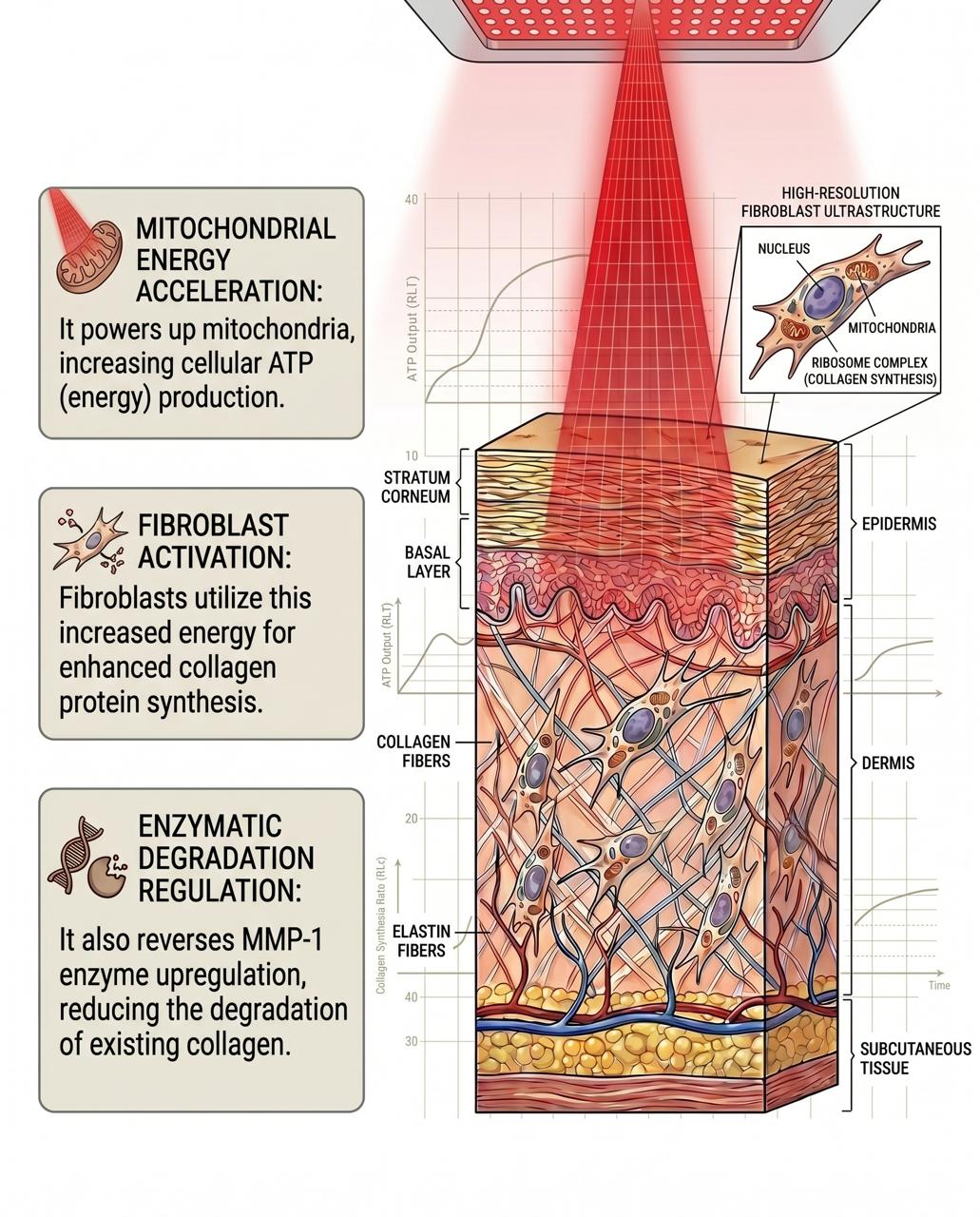
Red light therapy is thought to work by acting on the mitochondria — often called the "power plant" of your body's cells. Light at therapeutic wavelengths is absorbed by a molecule in the mitochondria called cytochrome c oxidase, which is the final enzyme in the cellular energy production chain. When stimulated by the right wavelength of light, this process increases the production of adenosine triphosphate (ATP) — the energy currency your cells run on.
With more available energy, cells can do their jobs more efficiently. In the skin specifically, this translates to four well-documented effects:
This is why red light therapy is associated with skin rejuvenation rather than surface-level cosmetic change — it works by supporting the cellular processes that build healthier skin from underneath, over weeks of consistent use, rather than masking the surface.
The mechanism is well-characterized at the cellular level, and understanding it helps explain why wavelength and consistency matter so much.
Red light therapy is thought to work by acting on the mitochondria — often called the "power plant" of your body's cells. Light at therapeutic wavelengths is absorbed by a molecule in the mitochondria called cytochrome c oxidase, which is the final enzyme in the cellular energy production chain. When stimulated by the right wavelength of light, this process increases the production of adenosine triphosphate (ATP) — the energy currency your cells run on.
With more available energy, cells can do their jobs more efficiently. In the skin specifically, this translates to four well-documented effects:
This is why red light therapy is associated with skin rejuvenation rather than surface-level cosmetic change — it works by supporting the cellular processes that build healthier skin from underneath, over weeks of consistent use, rather than masking the surface.


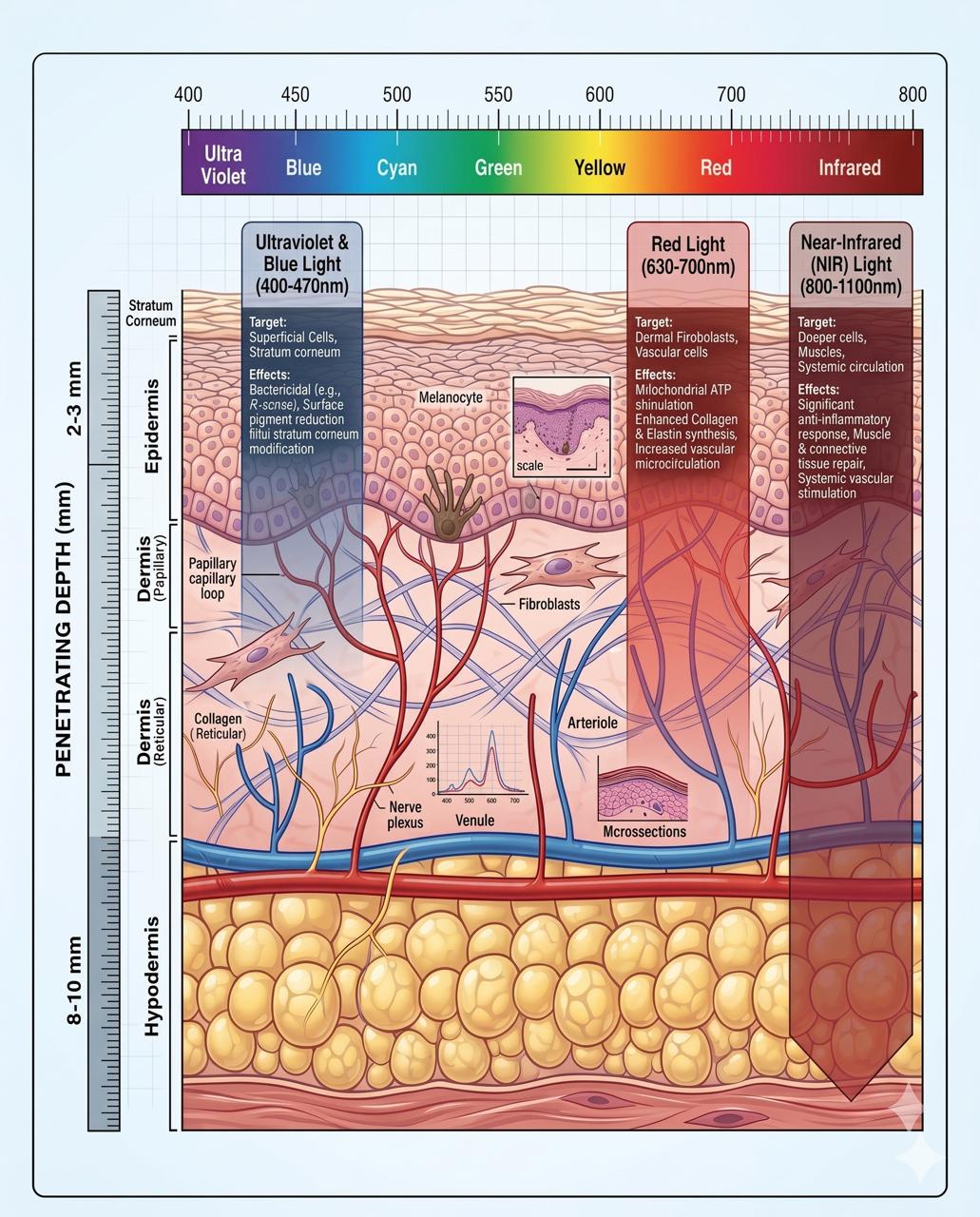
Not all "LED light" is equal. The specific wavelength — measured in nanometers (nm) — determines how deeply the light penetrates and what it does. This is the single most important thing to understand before choosing any device, because wavelength precision is what separates a clinically meaningful tool from a cosmetic novelty.
This is the workhorse wavelength of skin rejuvenation. Red light penetrates the upper layers of skin and is the primary driver of collagen stimulation, making it the most studied wavelength for fine lines, wrinkles, skin tone, and redness.
Near-infrared (NIR) is invisible to the eye and penetrates more deeply than red light — reaching beneath the skin's surface to support circulation, deeper tissue, and recovery. It's frequently paired with red light because the two wavelengths address different depths.
Blue light works at the surface, where it targets the bacteria associated with acne. It operates by a different mechanism than red and NIR and is the wavelength of choice for active inflammatory breakouts. We cover this in depth in our dedicated guide to blue light therapy for acne.
Because each wavelength does a different job at a different depth, devices that deliver red, near-infrared, and blue together can address multiple concerns — aging, recovery, and acne — in a single treatment. Importantly, research has found that combination polychromatic light is at least as effective as single-wavelength red for skin rejuvenation, while adding the benefits of the other wavelengths. The takeaway isn't "more colors are always better" — wavelengths outside the clinically validated ranges add little. It's that the right combination of validated wavelengths gives you broader coverage than red alone.
Not all "LED light" is equal. The specific wavelength — measured in nanometers (nm) — determines how deeply the light penetrates and what it does. This is the single most important thing to understand before choosing any device, because wavelength precision is what separates a clinically meaningful tool from a cosmetic novelty.
This is the workhorse wavelength of skin rejuvenation. Red light penetrates the upper layers of skin and is the primary driver of collagen stimulation, making it the most studied wavelength for fine lines, wrinkles, skin tone, and redness.
Near-infrared (NIR) is invisible to the eye and penetrates more deeply than red light — reaching beneath the skin's surface to support circulation, deeper tissue, and recovery. It's frequently paired with red light because the two wavelengths address different depths.
Blue light works at the surface, where it targets the bacteria associated with acne. It operates by a different mechanism than red and NIR and is the wavelength of choice for active inflammatory breakouts. We cover this in depth in our dedicated guide to blue light therapy for acne.
Because each wavelength does a different job at a different depth, devices that deliver red, near-infrared, and blue together can address multiple concerns — aging, recovery, and acne — in a single treatment. Importantly, research has found that combination polychromatic light is at least as effective as single-wavelength red for skin rejuvenation, while adding the benefits of the other wavelengths. The takeaway isn't "more colors are always better" — wavelengths outside the clinically validated ranges add little. It's that the right combination of validated wavelengths gives you broader coverage than red alone.
This is the most clinically supported cosmetic application. The most cited controlled trial in this area was published by Wunsch and Matuschka in Photomedicine and Laser Surgery in 2014. The study investigated the safety and efficacy of red and near-infrared light sources providing non-thermal photobiomodulation for improving skin appearance, and was published in Photomedicine and Laser Surgery, volume 32, issue 2. The trial demonstrated efficacy and safety for skin rejuvenation and intradermal collagen increase when compared with controls, with broadband polychromatic photobiomodulation showing no disadvantage versus the red-light-only spectrum.
In plain terms: consistent red and near-infrared light treatment was shown to improve patient-reported satisfaction, reduce the appearance of fine lines and skin roughness, and increase collagen density in the skin — and combining wavelengths did not reduce that benefit.
Red light helps calm the inflammation associated with breakouts, while blue light targets acne-causing bacteria directly. Red light therapy is promoted and studied as a treatment to help improve acne, and the related principle of photodynamic therapy using red light is already medically used for acne in clinical settings. For active inflammatory acne specifically, a combination of blue and red light tends to outperform either alone. Our blue light therapy for acne guide covers the bacterial mechanism in detail.
By supporting collagen, circulation, and reduced inflammation, red light therapy is used to help improve overall skin texture, even out tone, and calm redness. It's also promoted for improving the appearance of sun-damaged skin and conditions involving redness such as rosacea, though evidence strength varies by condition.
Some of the earliest research interest came from wound healing — this is where NASA's work began. Red and near-infrared light are studied for their role in supporting the skin's natural repair processes, including improving wound healing and the appearance of scars and stretch marks.
Near-infrared's deeper penetration is why it's investigated for relieving pain and inflammation associated with conditions like tendonitis, arthritis, and joint discomfort. This is a distinct application from skin rejuvenation and uses the deeper-penetrating NIR wavelength. We cover this in our guide to near-infrared light therapy for recovery.
This is the most clinically supported cosmetic application. The most cited controlled trial in this area was published by Wunsch and Matuschka in Photomedicine and Laser Surgery in 2014. The study investigated the safety and efficacy of red and near-infrared light sources providing non-thermal photobiomodulation for improving skin appearance, and was published in Photomedicine and Laser Surgery, volume 32, issue 2. The trial demonstrated efficacy and safety for skin rejuvenation and intradermal collagen increase when compared with controls, with broadband polychromatic photobiomodulation showing no disadvantage versus the red-light-only spectrum.
In plain terms: consistent red and near-infrared light treatment was shown to improve patient-reported satisfaction, reduce the appearance of fine lines and skin roughness, and increase collagen density in the skin — and combining wavelengths did not reduce that benefit.
Red light helps calm the inflammation associated with breakouts, while blue light targets acne-causing bacteria directly. Red light therapy is promoted and studied as a treatment to help improve acne, and the related principle of photodynamic therapy using red light is already medically used for acne in clinical settings. For active inflammatory acne specifically, a combination of blue and red light tends to outperform either alone. Our blue light therapy for acne guide covers the bacterial mechanism in detail.
By supporting collagen, circulation, and reduced inflammation, red light therapy is used to help improve overall skin texture, even out tone, and calm redness. It's also promoted for improving the appearance of sun-damaged skin and conditions involving redness such as rosacea, though evidence strength varies by condition.
Some of the earliest research interest came from wound healing — this is where NASA's work began. Red and near-infrared light are studied for their role in supporting the skin's natural repair processes, including improving wound healing and the appearance of scars and stretch marks.
Near-infrared's deeper penetration is why it's investigated for relieving pain and inflammation associated with conditions like tendonitis, arthritis, and joint discomfort. This is a distinct application from skin rejuvenation and uses the deeper-penetrating NIR wavelength. We cover this in our guide to near-infrared light therapy for recovery.
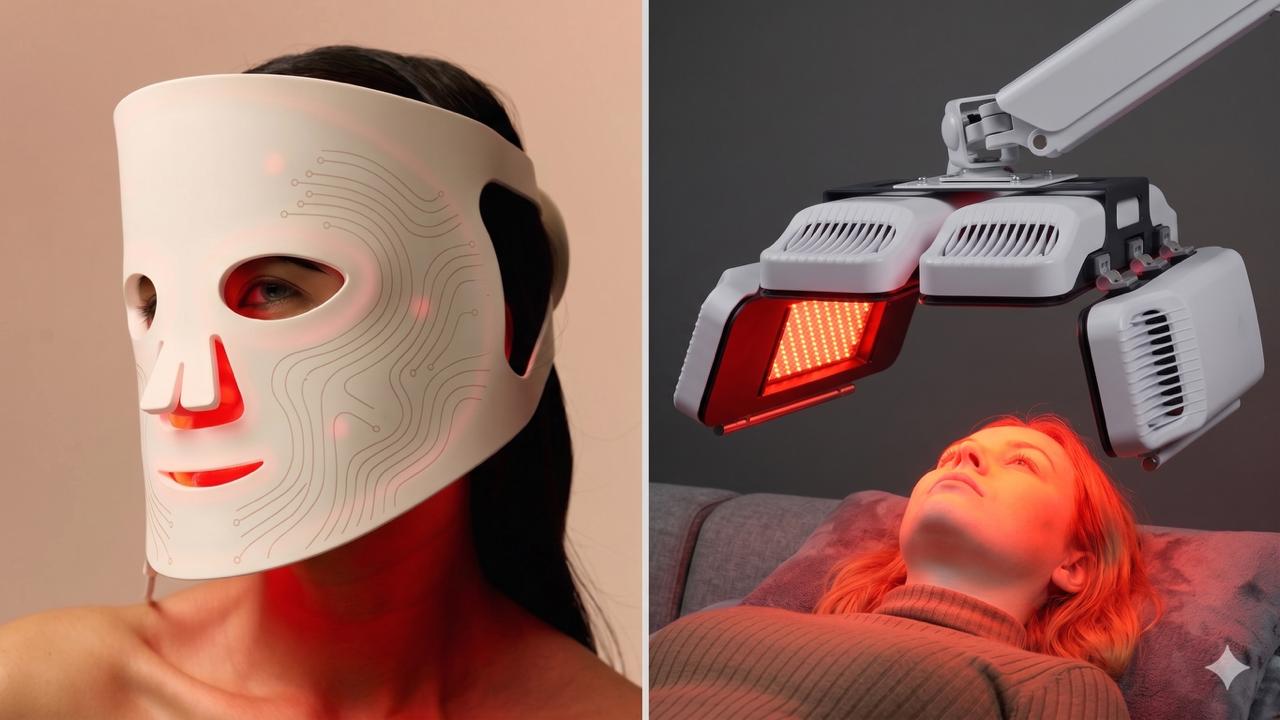
You'll encounter red light therapy in three main settings: dermatology and medical offices, spas and wellness centers, and at-home devices you purchase yourself.
At-home devices are generally safe to use and have made the technology dramatically more accessible. The honest trade-off: at-home devices may be less powerful than the equipment used by dermatologists or trained skin professionals, which can affect how quickly or dramatically you see results.
This is exactly why device specifications matter so much for at-home use — a well-engineered at-home device that delivers clinically validated wavelengths at adequate intensity closes much of that gap, while an underpowered device may not produce the results you're hoping for regardless of how long you use it. The next section covers how to tell the difference.
For most skin conditions, red light therapy is not a one-time treatment. You'll typically need ongoing sessions one to three times per week for weeks or even months to see and maintain results. Factoring in the per-session cost of professional treatment over that timeline is part of why many people choose a quality at-home device.
You'll encounter red light therapy in three main settings: dermatology and medical offices, spas and wellness centers, and at-home devices you purchase yourself.
At-home devices are generally safe to use and have made the technology dramatically more accessible. The honest trade-off: at-home devices may be less powerful than the equipment used by dermatologists or trained skin professionals, which can affect how quickly or dramatically you see results.
This is exactly why device specifications matter so much for at-home use — a well-engineered at-home device that delivers clinically validated wavelengths at adequate intensity closes much of that gap, while an underpowered device may not produce the results you're hoping for regardless of how long you use it. The next section covers how to tell the difference.
For most skin conditions, red light therapy is not a one-time treatment. You'll typically need ongoing sessions one to three times per week for weeks or even months to see and maintain results. Factoring in the per-session cost of professional treatment over that timeline is part of why many people choose a quality at-home device.
Getting results is less about any single session and more about consistency and technique. Here is how to use red light therapy correctly for the best outcome.
1. Start with clean, dry, product-free skin.
Sunscreen, makeup, and skincare products can block or scatter the light before it reaches your skin. Cleanse and dry your face first. Apply active serums and moisturizers after your session, not before.
2. Position the device correctly.
Hold or wear the device so the LEDs sit as close to your skin as possible without direct contact. Light intensity drops rapidly with distance — even an inch of gap meaningfully reduces the dose your skin receives.
3. Use the right session duration.
For most at-home facial devices, 10–15 minutes per session is the clinically supported range. Longer is not better — cells absorb available light within that window, and extending the session beyond it wastes time without adding benefit.
4. Protect your eyes.
Always use the included eye protection during sessions. Never look directly into the LEDs.
5. Apply skincare immediately after.
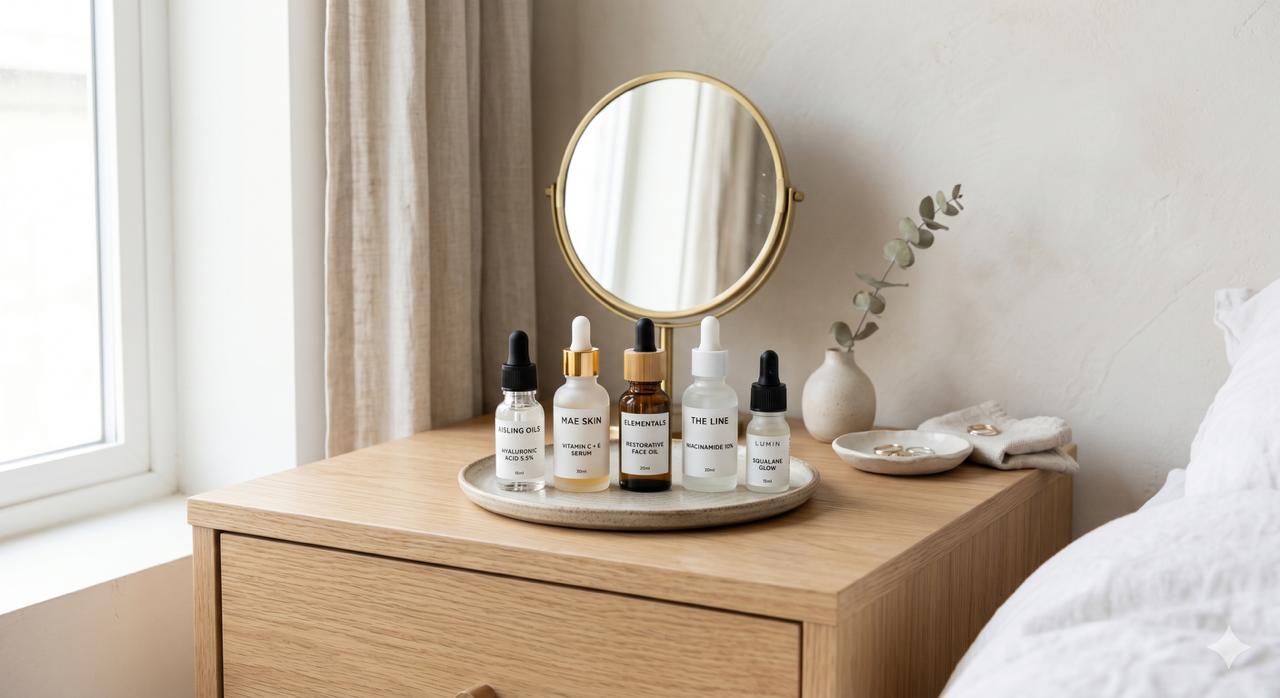
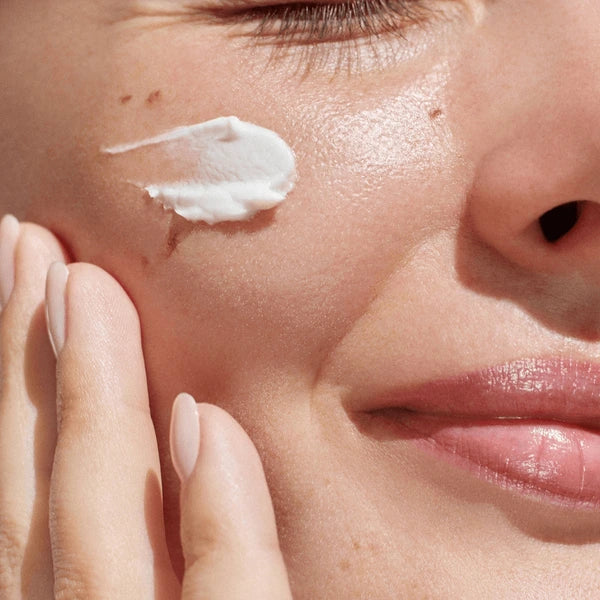
The post-session window is when your skin is most receptive. Apply your serums and moisturizer within a few minutes of finishing. See our guides on the best serums to use with your LED mask and the best moisturizer after red light therapy.
Getting results is less about any single session and more about consistency and technique. Here is how to use red light therapy correctly for the best outcome.
1. Start with clean, dry, product-free skin.
Sunscreen, makeup, and skincare products can block or scatter the light before it reaches your skin. Cleanse and dry your face first. Apply active serums and moisturizers after your session, not before.
2. Position the device correctly.
Hold or wear the device so the LEDs sit as close to your skin as possible without direct contact. Light intensity drops rapidly with distance — even an inch of gap meaningfully reduces the dose your skin receives.
3. Use the right session duration.
For most at-home facial devices, 10–15 minutes per session is the clinically supported range. Longer is not better — cells absorb available light within that window, and extending the session beyond it wastes time without adding benefit.
4. Protect your eyes.
Always use the included eye protection during sessions. Never look directly into the LEDs.
5. Apply skincare immediately after.
The post-session window is when your skin is most receptive. Apply your serums and moisturizer within a few minutes of finishing. See our guides on the best serums to use with your LED mask and the best moisturizer after red light therapy.
Frequency matters more than intensity. The evidence-supported rhythm:
Consistency over months produces compounding results. A device used 3 times per week for 12 weeks will outperform the same device used daily for 2 weeks then abandoned.
Frequency matters more than intensity. The evidence-supported rhythm:
Consistency over months produces compounding results. A device used 3 times per week for 12 weeks will outperform the same device used daily for 2 weeks then abandoned.
Because red light therapy works by supporting cellular processes over time, results follow a predictable timeline rather than appearing overnight:
Anyone promising visible transformation in days is overselling. The clinical evidence for red light therapy is built on consistent use over weeks — not single sessions.
Because red light therapy works by supporting cellular processes over time, results follow a predictable timeline rather than appearing overnight:
Anyone promising visible transformation in days is overselling. The clinical evidence for red light therapy is built on consistent use over weeks — not single sessions.
Red and near-infrared wavelengths target aging through different mechanisms and at different depths, so using them together — rather than red alone — produces meaningfully better anti-aging results.
Red light (630–660nm) works in the upper layers of skin, directly stimulating fibroblasts to produce collagen and elastin. This is the primary driver of fine line and wrinkle improvement.
Near-infrared (810–850nm) penetrates deeper, supporting circulation, reducing deeper inflammation, and reaching the tissue layers where structural aging occurs below what red light alone can access.
For anti-aging specifically:
Red and near-infrared wavelengths target aging through different mechanisms and at different depths, so using them together — rather than red alone — produces meaningfully better anti-aging results.
Red light (630–660nm) works in the upper layers of skin, directly stimulating fibroblasts to produce collagen and elastin. This is the primary driver of fine line and wrinkle improvement.
Near-infrared (810–850nm) penetrates deeper, supporting circulation, reducing deeper inflammation, and reaching the tissue layers where structural aging occurs below what red light alone can access.
For anti-aging specifically:
If you've decided an at-home device makes sense for you, here are the specifications that actually determine whether it works — and the marketing claims that don't matter as much as they sound.
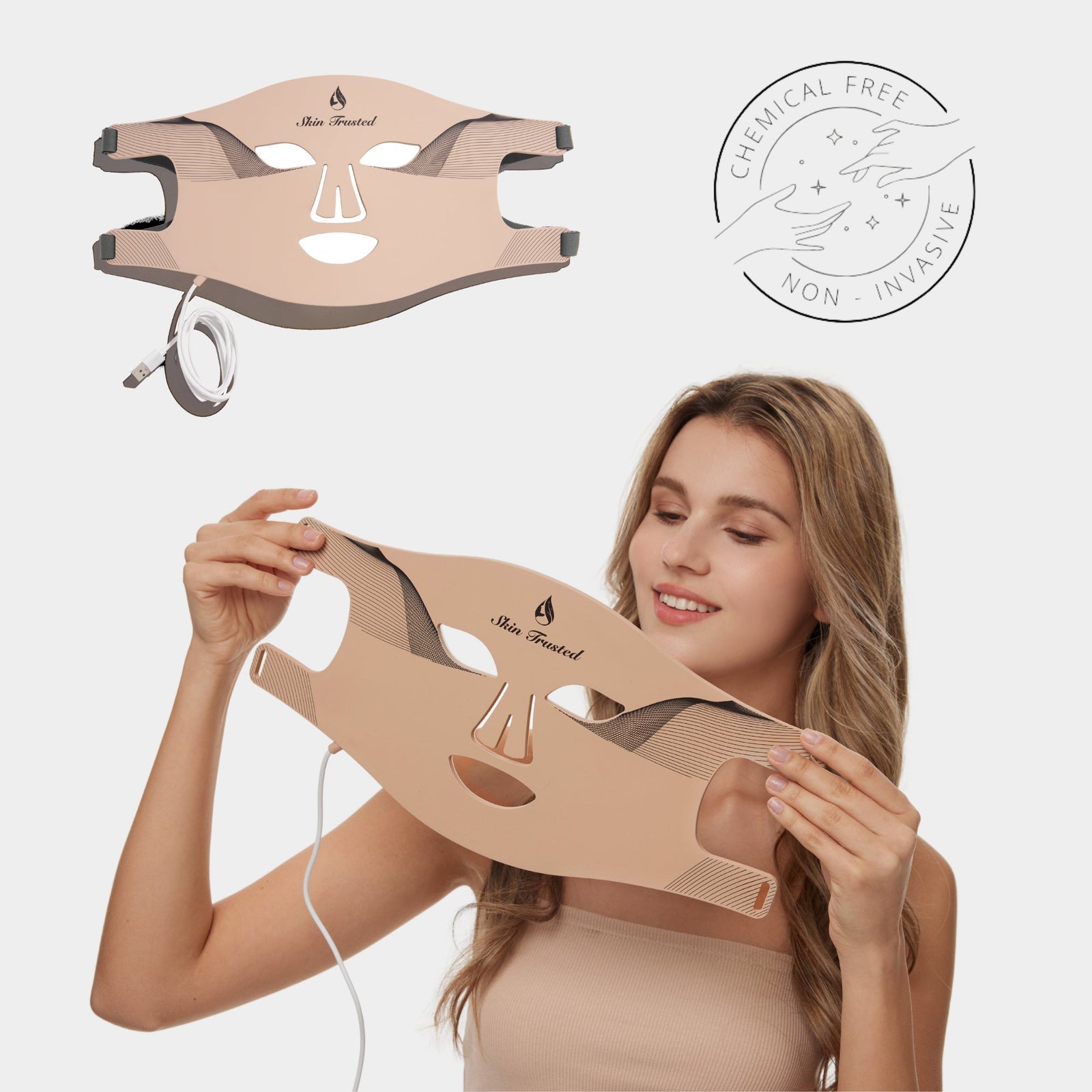
For reference, the Skin Trusted LED Light Therapy Mask is built around these criteria — it delivers red (630 nm), blue (460 nm), and near-infrared (850 nm) wavelengths at 50 mW/cm² across 216 LEDs, with a combined "Purple Complex" mode that runs all three simultaneously. It's offered at a fraction of the price of comparable medical-grade devices. For a full breakdown of how it compares to other devices, see our best LED face mask comparison.
If you've decided an at-home device makes sense for you, here are the specifications that actually determine whether it works — and the marketing claims that don't matter as much as they sound.
For reference, the Skin Trusted LED Light Therapy Mask is built around these criteria — it delivers red (630 nm), blue (460 nm), and near-infrared (850 nm) wavelengths at 50 mW/cm² across 216 LEDs, with a combined "Purple Complex" mode that runs all three simultaneously. It's offered at a fraction of the price of comparable medical-grade devices. For a full breakdown of how it compares to other devices, see our best LED face mask comparison.


Unlock the full potential of your LED light therapy mask by pairing it with the right skincare ingredients. Discover which serums amplify your results and which ones to avoid for a truly radiant, healthy complexion.

What you do after your session is just as important as the session itself. Discover how to choose the best moisturizer after red light therapy to lock in hydration and support your skin barrier. We look at key ingredients like Ceramides and Squalane that help "seal in" the LED results and keep your skin plump and protected.

Do you need eye protection for red light therapy mask sessions? While LED therapy is a skincare breakthrough, high-power devices require proper ocular safety. Learn why medical-grade silicone eye shields are essential for protecting your vision from intense 415nm blue and 630nm red light during your 10-minute professional treatment.